Research and Teaching
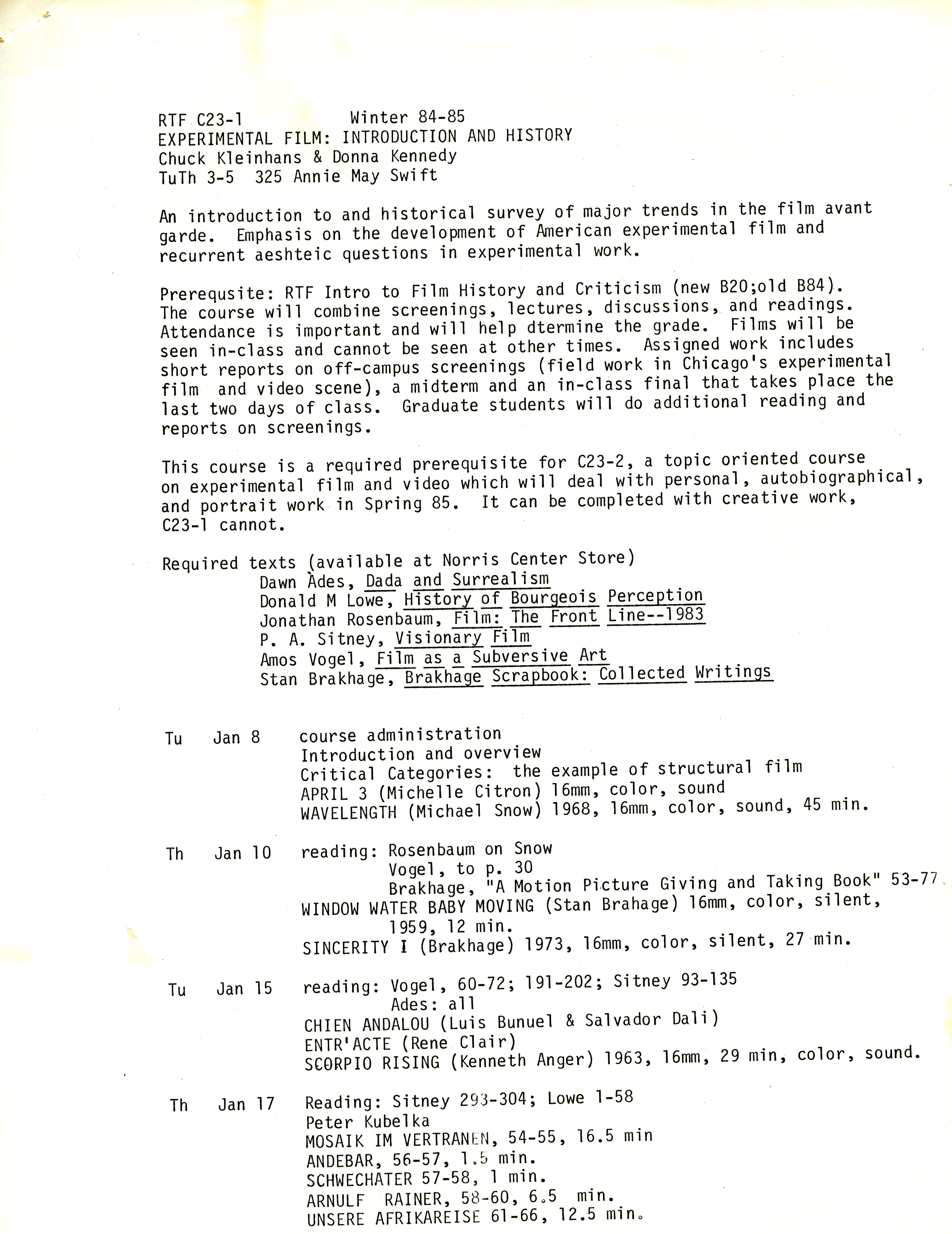
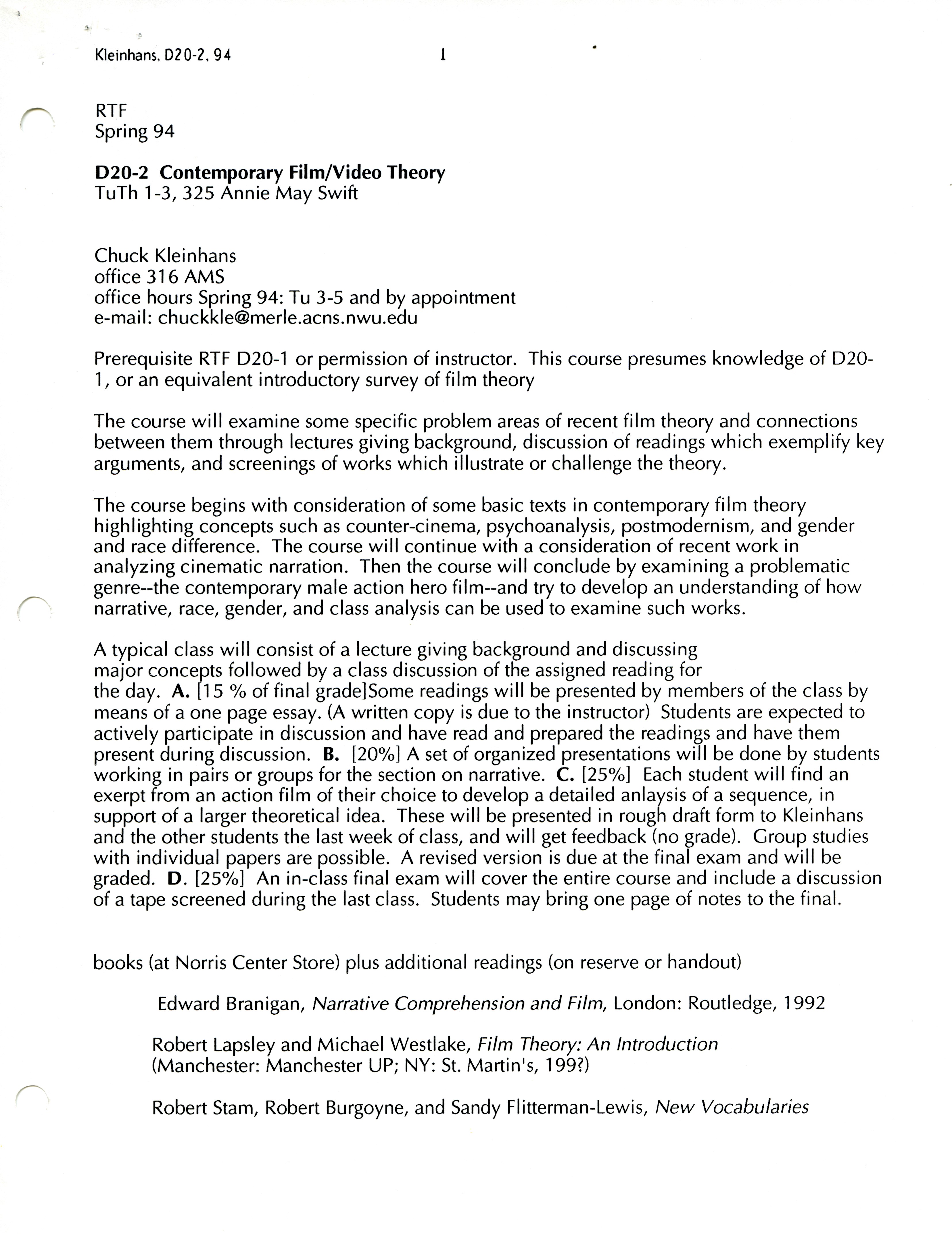
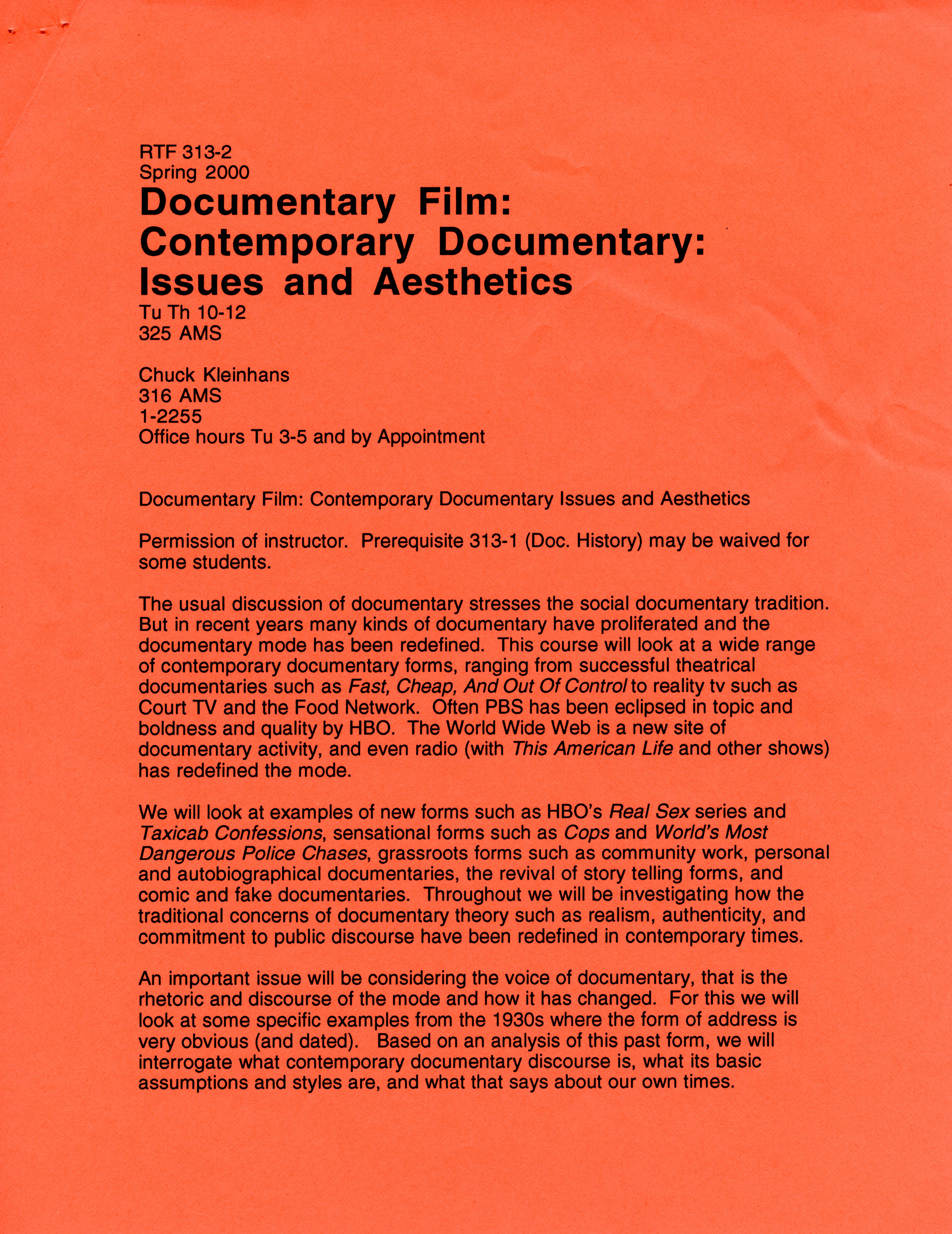
For Kleinhans and Lesage, teaching was a form of activism and resistance. In this collection, developments of syllabi reveal the extreme thought put into student engagement and understanding of complex issues from around the world.
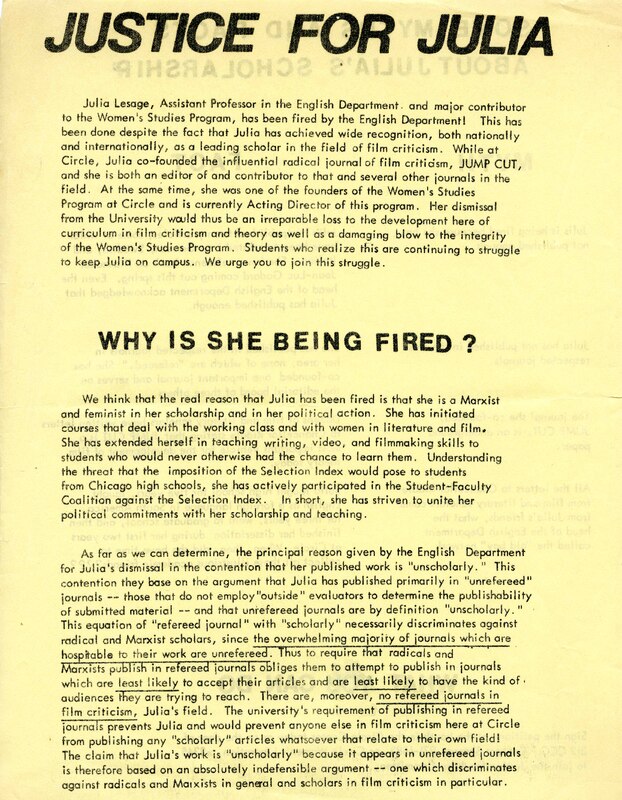
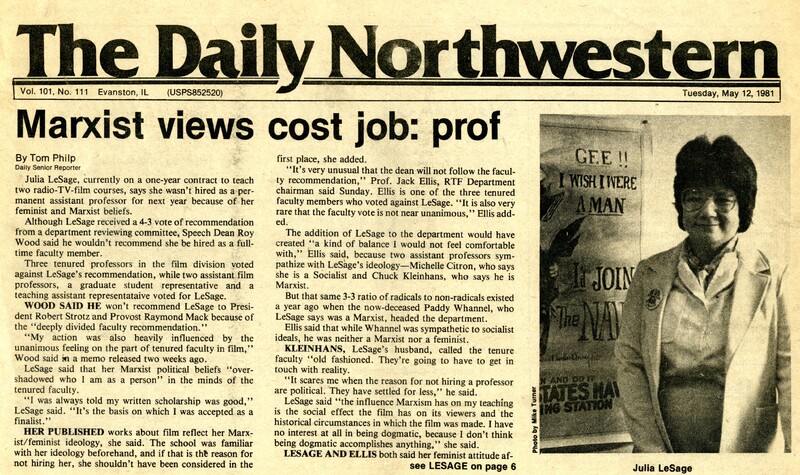
Often inspired by one another, the teaching and research conducted by Kleinhans and Lesage often share materials. They did not attempt to hide any idea– rather it was shared with peers, comrades, students, and scholars alike. They researched, and in hand taught, about a wide array of topics, including Independent Film and Video, Gender and Sexuality, World Cinema, Mass Culture, and Trash/Sleaze media. At some points in their careers, their political approach to teaching film and media studies affected employment opportunities, particularly for Lesage's identity as a Marxist and feminist scholar.
They worked to push the boundaries of what should be discussed in a classroom setting, encouraging students to have conversations about hard topics in an open, safe environment. “The most important thing in teaching that involves highly charged issues such as pornography is to create a classroom atmosphere that promotes mutual learning. I value class discussions in which students can approach differences they may have with trust, tolerance, and respect for each other. I want students to respect diversity. “ (“Teaching Sexual Images: Some Pragmatics”, Jump Cut 40). Kleinhans's legacy as an educator was recognized officially in 2007 when he became the first recipient of the Society for Cinema and Media Studies award for outstanding pedagogy.
The sample items here demonstrate some of the political oppression experienced by Lesage in her teaching career, and they also show Kleinhans's approach to teaching through syllabi and an excerpt from a teaching handbook.